One of the biggest reasons buyers hire a buyer’s agent is the hope of paying less. But how does that actually work? Is it clever tactics, secret networks or simply doing the homework that most buyers don’t have time for?
The honest answer is mostly the last one. This guide explains how buyer’s agents negotiate, where savings can come from, and why the real value is more than a lower number on a contract. We’ll also be upfront about what no agent can promise.
First, an Honest Word About ‘Savings’
No ethical buyer’s agent can guarantee a discount. Prices depend on the property, the seller, the competition and the market on the day. What a good agent can do is help you avoid overpaying, avoid costly surprises and negotiate from a position of knowledge. Sometimes that results in a lower price. Sometimes it results in walking away from a property that would have cost you far more than it was worth.
So when we talk about savings, think of it as value protected, not a promised percentage off.
Where Negotiating Power Really Comes From
1. Knowing what a property is actually worth
Negotiation starts with evidence. A buyer’s agent researches recent comparable sales, looks at how similar properties have performed in the same pocket, and adjusts for differences such as condition, aspect, land size and street. That gives you a realistic price range, so you know when an asking price or a price guide is reasonable and when it isn’t.
Without that anchor, it’s easy to be swayed by an exciting campaign, a competitive crowd or a figure that simply sounds fair.
2. Understanding the seller’s situation
Every sale has a story. How long has the property been on the market? Has it been listed before? Is the seller buying elsewhere, relocating or simply testing the market? An experienced agent asks the right questions and reads the signals, within professional and ethical limits, to understand what matters most to the seller. Price is rarely the only factor.
3. Negotiating more than the price
Some of the most valuable negotiations are about terms, not just dollars. Depending on the sale, a buyer’s agent may discuss:
- Settlement date that suits the seller (and you)
- Deposit amount and timing
- Inclusions or exclusions in the contract
- Conditions where they’re available and appropriate
- Access and timing for inspections before you commit
A seller who needs a quick, clean sale may value certainty as much as the last few thousand dollars.
4. Using due diligence to your advantage
Building and pest inspections, contract review and checks on title and planning can uncover issues that affect value. When something genuine turns up, a well-prepared agent can use it to renegotiate the price, request repairs, or advise you to walk away. If you’re buying on your own, our property inspection service is open to anyone who wants an inspection done in Victoria, whether or not they’re a client, and it’s included in our full package for clients.
5. Staying calm when the heat is on
Price pressure, ‘other interested parties’ and tight deadlines can make even careful buyers hurry. An agent who isn’t emotionally attached to the property can hold to your limit and recommend walking away when the numbers stop making sense.
6. Experience with the process
Selling agents negotiate every week. An experienced buyer’s agent does too, so they know how different sale methods work, what a reasonable counter-offer looks like and when to hold firm.
Negotiating at Auction vs Private Sale
The approach depends on how the property is sold.
At auction, preparation does most of the work. That means setting a firm limit in advance, understanding the likely competition, and bidding with discipline rather than emotion. Auction purchases are generally unconditional, which makes thorough pre-auction due diligence essential. Our guide to how to bid at auction without overpaying in Melbourne goes into this in detail.
In a private sale or by negotiation, there’s usually more room to discuss price and terms directly, including how and when to make an offer. Rules, cooling-off rights and conditions differ between sale types, so confirm the details with your conveyancer or solicitor before you commit.
What ‘Value’ Really Means
It’s tempting to judge a buyer’s agent by one number: the discount. But value shows up in several ways:
| Where value shows up | What it looks like |
|---|---|
| Price | Not overpaying, and sometimes negotiating a better result |
| Terms | Settlement, deposit and inclusions that suit you |
| Risk | Spotting problems before you’re committed |
| Time | Hours saved on searching, inspecting and chasing |
| Confidence | Clear, independent advice on a major decision |
| Opportunity | Access to properties you might not have found, including off-market options where available |
Some of these are hard to put a dollar figure on, but they matter, especially when a mistake could cost tens of thousands of dollars.
A Simple Illustration of Savings Potential
Here’s a purely hypothetical example to show how the maths can work. It isn’t a promise or a typical result.
Suppose you’re buying a property at around $800,000. If research and negotiation helped you avoid overpaying by 1%, that’s $8,000. If a building inspection uncovers a genuine defect and you negotiate a price adjustment or walk away from a costly repair, the figure could be larger. On the other hand, if the market is strong and competition is fierce, the best result might simply be securing the right property at a fair price.
The point isn’t to predict a saving. It’s to compare the agent’s fee with the potential cost of a mistake, and to decide whether the service is worth it for your situation. We cover fees in How Much Does a Buyer’s Agent Actually Cost? and the value question in Is a Buyer’s Agent Worth the Cost in Melbourne?
What Buyer’s Agents Can’t Do
It’s just as important to know the limits:
- They can’t guarantee a price or discount. The market and the seller have a say.
- They can’t create stock. If competition is intense, you may still miss out.
- They can’t bend the rules. A reputable agent negotiates honestly and professionally.
- They don’t make the decision for you. You choose whether to proceed.
Questions to Ask About Negotiation
Before you hire, ask:
- How do you research value and decide on a price range for me?
- How do you approach negotiation, and how do you involve me in decisions?
- Can you share examples of negotiations similar to mine, with details de-identified?
- How do you handle auctions, and how will we agree on my limit?
- What happens if the property isn’t worth the asking price?
- Are your fees fixed, or do they depend on the price achieved, and how does that affect incentives?
- Do you receive any commissions or payments from anyone other than me?
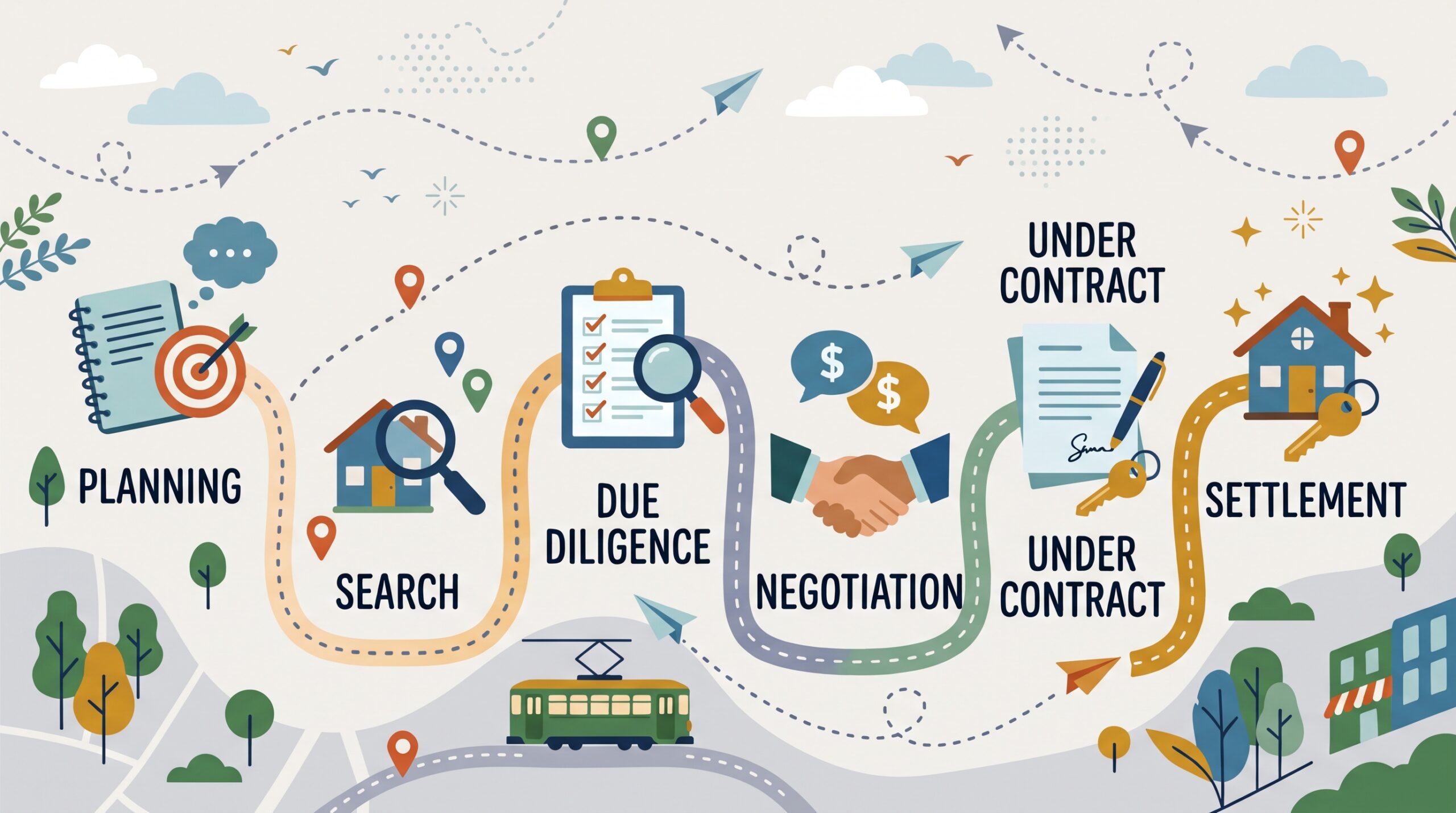
Be cautious of anyone who guarantees a saving. Our buyer’s agent FAQs and why buyer’s agents page explain how we think about the relationship, and the process you’ll go through shows each step.
Is a Buyer’s Agent Worth It for Negotiation Alone?
It depends. If you’re confident negotiating, know your market and have time to prepare, you may do well on your own. If you’re nervous about auctions, buying somewhere unfamiliar, competing against experienced buyers or simply short on time, professional negotiation can be a valuable safeguard. For more help deciding, see Buyer’s Advocate or Buyer’s Agent in Melbourne: What They Do and When to Hire One.
We work with first home buyers, home buyers, property investors and those looking at commercial property.
Frequently Asked Questions
Can a buyer’s agent really get me a better price?
A skilled agent can help you avoid overpaying through research and negotiation, but no one can guarantee a particular price or saving.
Does a buyer’s agent negotiate with the seller or the selling agent?
Usually with the selling agent, who represents the seller. The buyer’s agent represents you.
Can a buyer’s agent negotiate after a building inspection?
Often, yes. If the inspection reveals genuine issues, they can use that information to renegotiate or advise you on whether to proceed, depending on the sale method and contract terms.
Can a buyer’s agent negotiate at auction?
They can bid on your behalf, following the limit and strategy you agree in advance. Auctions are generally unconditional, so preparation matters.
Will the fee cancel out any savings?
It can in some cases, and in others the service may be worth far more than the fee. Compare the fee, the services included and the risk you’re trying to reduce.
Do I still need a conveyancer?
Yes. A buyer’s agent works alongside your conveyancer or solicitor and your lender or broker, not in place of them.
Related Reading
Want to Pay a Fair Price? Make Your Next Move a Smart One.
You deserve to buy with confidence, not guesswork.
Negotiating against experienced selling agents, competitive auctions, and hidden risks can feel overwhelming. At Prime Advocates, we help buyers in Melbourne make informed decisions, assess market value and avoid costly mistakes, so you can focus on finding the right property for your needs and budget.
Book a FREE 30-minute Property Strategy Session to talk through your goals and discover how a buyer’s agent can help you negotiate with more confidence.
Important Information and Disclaimer
This article is published by Prime Advocates for general information and education only and is current as at October 2026. It is not financial, legal, tax, credit or property investment advice. It has been prepared without taking into account your personal objectives, financial situation or needs, so please consider whether it suits your circumstances before acting on it.
- Get independent advice. Before you buy, speak with a licensed conveyancer or solicitor, a qualified mortgage broker or lender and, where relevant, an accountant or tax adviser.
- Savings are not guaranteed. References to savings, better prices or negotiation outcomes are general in nature. The hypothetical figures in this article are illustrations only, not predictions or typical results. Actual outcomes depend on the property, the seller, market conditions, competition and your own decisions, and no particular price, discount or result is promised.
- Sale rules differ. Auctions, private sales and other methods are subject to different rules, including cooling-off rights and conditions. Confirm how they apply to your purchase with your conveyancer or solicitor before you commit.
- Rules and costs change. Stamp duty, grants and concessions, eligibility criteria and buyer’s agent fees change over time and vary between buyers and properties. Confirm current details with the State Revenue Office Victoria, Consumer Affairs Victoria or the relevant government body, and ask any buyer’s agent for their fees in writing.
- No guarantees. Property values and market conditions can rise and fall. Past results, including the client stories on our website, are not a prediction of future results.
- Third-party content. Links to other websites are provided for convenience only. We don’t control or endorse their content.
- Understand our role. A buyer’s agent acts for the buyer under a written agreement. Ask us to explain the scope of service, fees and any conflicts of interest before you sign.